/
How to rank your business on Google maps
Google Maps is one of the strongest lead channels for local service businesses. When your business appears in the Local 3-Pack, you earn more calls, clicks, and website visits than competitors who appear below. This placement is not random. Google ranks businesses based on signals that show:who you are, where you are, and how customers interact with you. Almost half…
By VerumOctober 27, 2025
Google Maps is one of the strongest lead channels for local service businesses. When your business appears in the Local 3-Pack, you earn more calls, clicks, and website visits than competitors who appear below. This placement is not random. Google ranks businesses based on signals that show:
who you are, where you are, and how customers interact with you.
Almost half of all Google searches have local intent. This means most users are actively searching for a nearby solution, and Google Maps becomes the deciding factor.
How Google Decides Who Gets Top Visibility
Google analyzes three core factors:
Relevance
Your profile tells Google what you do.
Your categories, services, business description, and even the terms used in your reviews influence how well Google understands your expertise.
Distance
Google tries to match searchers with the closest relevant business.
You cannot move your physical location, but you can define service areas so Google knows the regions you cover.
Prominence
This is where most businesses gain or lose advantage.
Prominence reflects:
- your reviews
- your website authority
- your activity on the profile
- how often customers interact with your listing
- the freshness of your photos and posts
Engagement matters. Studies show users are significantly more likely to call or request directions from profiles with recent visuals and active posting.
Why Some Businesses Rise to the Top
Businesses that consistently rank high on Google Maps share a pattern: they look alive.
Google wants to recommend companies that are active, trusted, and clearly serving real customers.
They keep their information updated
Google favors profiles with complete and accurate details. Hours, categories, links, and business info must stay consistent everywhere, including your website and directories.
They earn reviews steadily
Review velocity matters more than total count.
A slow, steady flow of recent reviews signals ongoing trust, while old or inactive feedback can cause your ranking to slip.
Google also weights different types of reviews:
- longer reviews
- photo reviews
- reviews with keywords
- mentions of cities or neighborhoods
These strengthen relevance and can expand your radius.
They post updates regularly
Weekly posts signal that your business is active.
Inactive profiles often lose visibility, especially in competitive Arizona markets where categories like pools, HVAC, roofing, restoration, and landscaping are saturated.
They use visuals strategically
Listings with a steady supply of photos get more clicks, more calls, and more direction requests. Google sees this engagement as a quality signal and rewards it with better rankings.
They encourage engagement
Google watches how searchers behave:
- do they click your photos
- do they scroll through your services
- do they tap your call button
- do they request directions
- do they stay on your profile longer than competitors
More engagement equals stronger prominence.
Understanding Your Google Maps “Proximity Bubble”
Google Maps does not rank you the same across an entire city.
You rank in pockets, based on:
- how close the searcher is
- how strong your signals are
- how competitive that neighborhood is
For example, you may rank well in one part of Mesa but not in another.
Regular updates, reviews, and photos help strengthen your radius and expand these pockets over time.
This is why consistent activity is more effective than one-time optimization.
Why Consistency Wins Over Everything Else
Climbing into the Local 3-Pack requires:
- fresh posts
- new reviews
- updated services
- regular photo uploads
- accurate business details
- ongoing customer engagement
- consistent reputation management
Google does not reward businesses that set up their profile once.
It rewards businesses that behave like they are open, active, and serving customers today.
At Verum, we see this in the data. Many clients experience noticeable increases in call volume within the first 90 days of maintaining consistent Google Business Profile activity.
Let Verum Help You Reach the Google Maps 3-Pack
If your goal is to earn more visibility, more customers, and more local leads, your Google Business Profile needs continuous care. Verum builds and maintains the systems that help service businesses stay active, relevant, and competitive in Maps-based search.
Book a discovery call with Verum, and let’s build the strategy that moves your business into the Local 3-Pack.
Recent Articles
RecentArticles

GEO + AEO
If AI Is Replacing Search, Why Is Google Telling You to Focus on SEO?
Everyone is trying to sell businesses a new AI search playbook. Google’s latest guidance says something much less dramatic: build a better website, publish content with real proof, and stop treating every new acronym like a strategy.
SEOGEO + AEOAI + Agents
Branding
Grand opening may 20th 4-7p // verum strategy + meeting hq
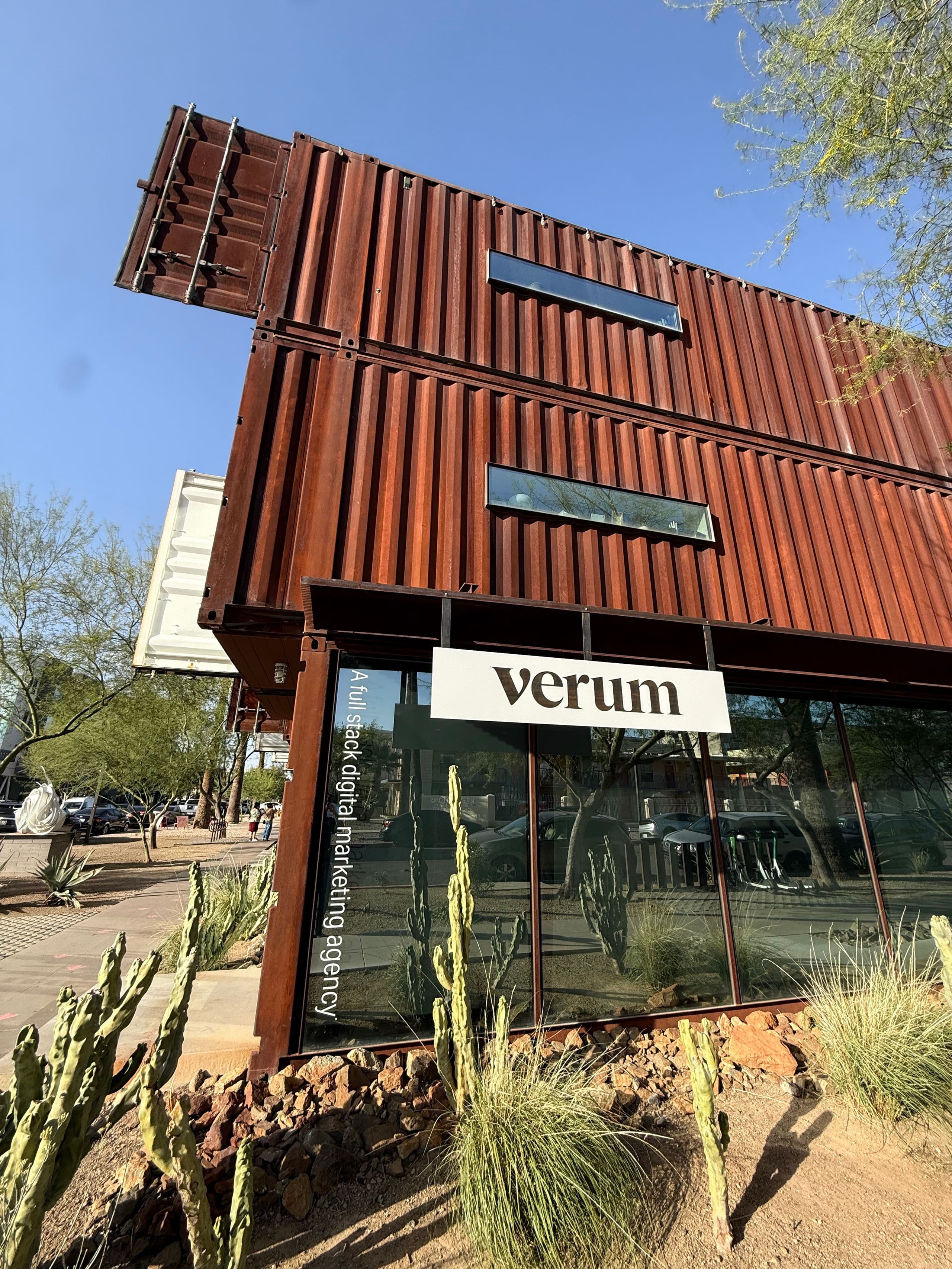
The Verum team is excited to officially opening its our Downtown Phoenix strategy + meeting HQ and content studio. Come check out the new space Wednesday May 20th 4-7PM, meet some of the team, see the studio, grab a beverage, have a bite, and talk shop.
Digital Strategy

Strategic Planning
Verum opens a new strategy + meeting hq in downtown phoenix
After 11 years serving clients across the United States, Verum Digital Marketing has opened a new meeting space and strategy HQ in downtown Phoenix.
Digital Strategy