/

Most ad budgets are split by habit, not managed by return. Real allocation starts when spend moves toward the platforms, campaigns, and outcomes producing revenue right now.
A percentage to Google. A percentage to Meta. Maybe something to Bing. The split is based on habit, not performance.
Walk into any quarterly budget review and you'll hear a version of the same conversation.
Last quarter we put 60% in Google, 30% in Meta, 10% in Bing. This quarter we want to test more on Meta, so let's flex five points over.
The numbers shift. The logic feels reasonable.
But nothing about that conversation is actually a strategy.
It's a distribution exercise dressed up as a decision.
Distribution and allocation sound similar. They are not the same thing.
Distribution asks how much each platform should get. Allocation asks where return is being produced right now.
The first question has a static answer that gets reset once a quarter. The second question changes constantly, because performance changes constantly.
Brokering a budget means following the second question wherever it leads. Even when the answer doesn't match the plan that was approved last quarter.
Google, Meta, Bing, and TikTok don't compete with each other. They contribute different things at different stages of intent.
Some platforms generate high-intent traffic ready to convert. Others assist earlier in the journey, building awareness that closes elsewhere.
Some campaigns scale efficiently. Others plateau quickly and need to be cut.
When you fund them equally, you're treating different functions as if they produce identical outcomes.
They don't.
The brokering posture starts from a different premise. Instead of asking which platform deserves the most budget, it asks where return is being produced this week. Which leverage points would compound if you fed them more.
That question can't be answered with a quarterly plan.
It can only be answered with revenue data flowing back to the platform level in close to real time.
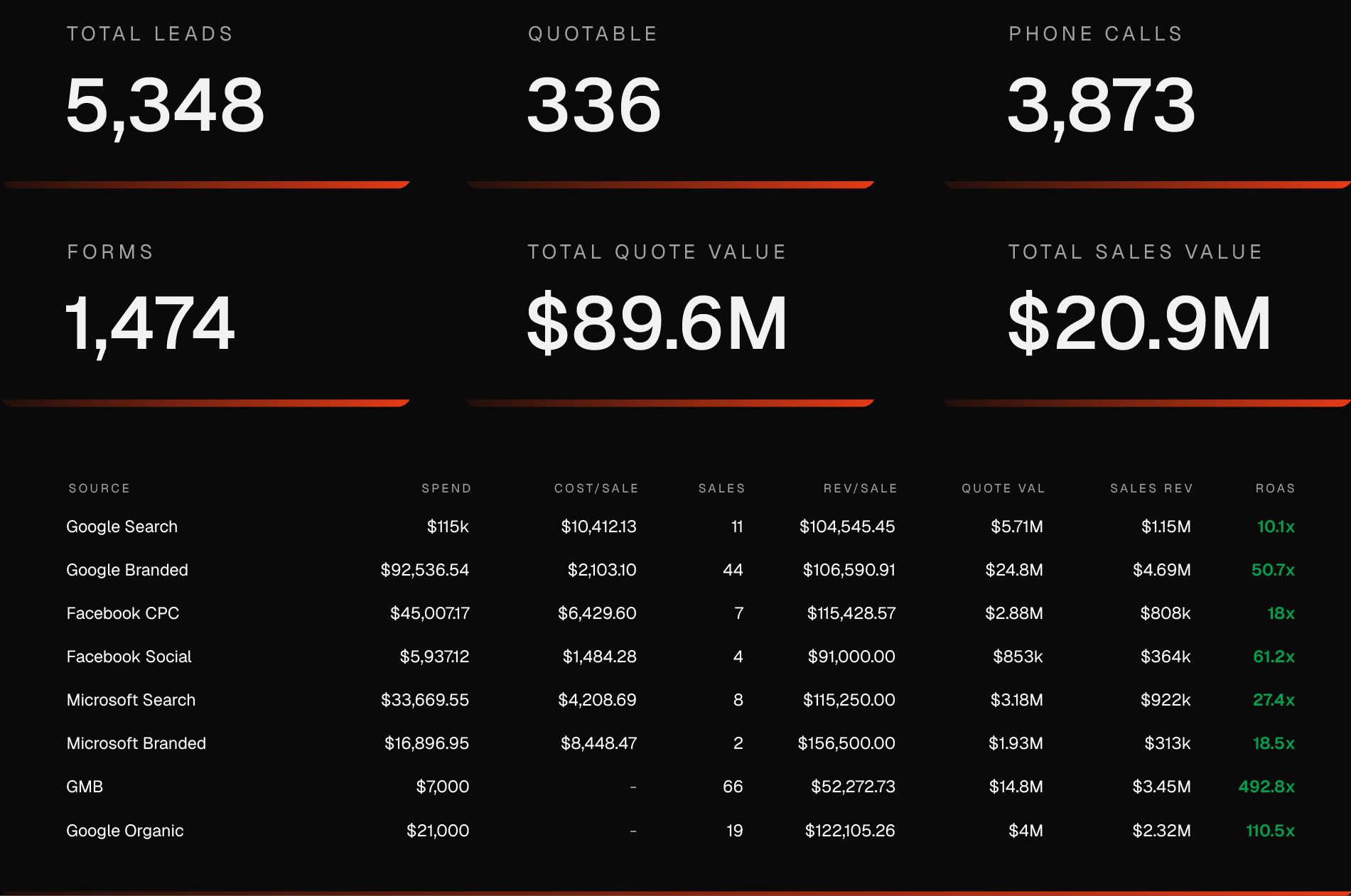
When budget starts moving toward yield instead of habit, three things change at once.
Allocation becomes fluid. Decisions get made weekly instead of quarterly. New tests run with clear benchmarks instead of with hopeful estimates.
The campaigns producing the highest-value customers get more spend. The ones generating volume without yield get cut faster than they used to.
And the platforms that contribute most to closed revenue, not the ones that look most efficient inside their own dashboard, become the ones that grow.
If a platform stopped producing return tomorrow, how long would it take you to see it in your reporting?
If the honest answer is next quarter, what you have isn't allocation. It's a spreadsheet that gets updated occasionally.
Brokering exists precisely so that the answer to that question is closer to next week.
Brokering requires revenue visibility across every platform, in real time, attributed back to the campaign that produced it.
Less than 4% of U.S. agencies can show that.
Without it, every conversation about reallocation is a guess about which platform deserves more, dressed up in the language of strategy.
The reason it stays a guess isn't because the agencies running the budgets don't care. It's because they don't have the infrastructure to know.
The infrastructure question matters more than most clients realize.
A team can have the right philosophy about budget allocation and still produce bad allocation decisions if the data they're working from is incomplete.
The opposite is also true. A team with full-path revenue data can outperform a more sophisticated team running on platform metrics alone.
Because the data corrects the decisions even when the strategy is simple.
If you took the last four quarters of allocation decisions and rebuilt them with revenue data instead of platform performance, how many would you make differently?
Probably more than you'd want to admit.
That gap, the one between the decisions you made and the decisions you would have made, is the cost of distribution masquerading as strategy.
You don't scale platforms. You scale outcomes.

Most ad strategies are built around clicks, leads, and platform metrics. Real performance starts when spend is tied directly to revenue, ROAS, and the business outcomes that prove what is actually working.

In 2026, social media is no longer about going viral or posting just to stay busy. For service-based businesses, it plays a much quieter but far more important role. It helps customers decide whether they trust you enough to pick up the phone.
For service-based businesses, customer demand follows predictable patterns. Weather changes, routines shift, and the same problems show up at the same time every year. Seasonal marketing works because it meets customers when their attention is already there.