Buyers do not need more polished claims in their feed. They need evidence, and the best paid social ads make a company’s credibility visible before the buyer has to ask for it.
People are trained to ignore ads
Most people do not open Instagram, Facebook, TikTok, LinkedIn, or YouTube hoping to be advertised to. They open the app to be entertained, informed, distracted, inspired, connected, or validated. An ad is an interruption unless it earns a different role.
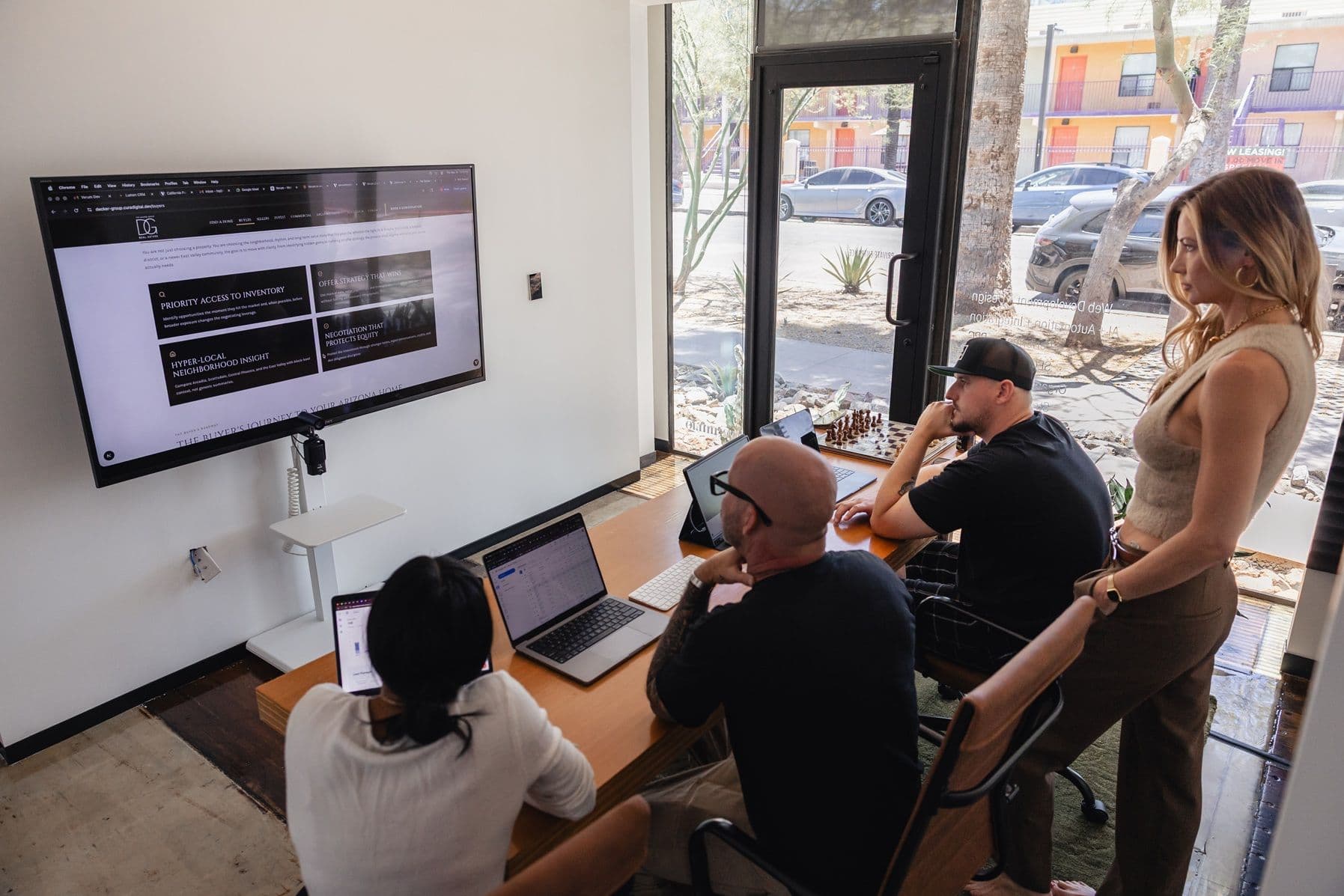
That is why so many polished ads fail. They use familiar stock-style visuals, broad claims, generic benefits, and language that feels like it came from a marketing meeting. The buyer’s brain knows what to do with that: skip, scroll, and ignore.
The best paid social ads do something different. They do not just announce. They show, making proof visible in a way that feels natural to the platform and useful to the buyer. Proof can slow the scroll because it gives people something real to process.
Proof creates belief faster than claims
A company can say it does excellent work, or it can show the finished project. It can say clients trust it, or it can show a client explaining what changed. It can say it has a better process, or it can show the team inside that process. It can say it creates results, or it can show the before, the after, and the numbers.
The second version feels stronger because the buyer is not being asked to accept the faith claim. They are being given something to evaluate. That matters in paid social because attention is limited, skepticism is high, and an ad has very little time to create enough trust for the next action.
Kantar and WARC found that the most creative and effective ads generated more than four times as much profit as lower-performing creative. That research does not prove that one specific format will always outperform another, but it does demonstrate that creative quality has real business consequences. In a trust-starved feed, proof gives the creative something meaningful to carry.
Native does not mean sloppy
There is a misunderstanding in paid social that “native” means low quality, but that is not the point. An ad can feel organic without feeling careless. It can be well shot without feeling overproduced, and it can be strategic without feeling scripted to death.
The issue is not production value. The issue is believability. A phone-shot founder clip can outperform a studio ad if it carries conviction. A customer video can outperform a graphic if it answers the buyer’s real objection. A project walkthrough can outperform a polished brand spot if it gives the viewer evidence they can trust.
The strongest paid-social creative often lives in the middle. It is real enough to feel human, polished enough to reflect the brand, structured enough to move the buyer, and specific enough to prove something. That is a higher standard than simply making an ad look organic. It requires judgment and taste.
Proof-based ads come from inside the business
A lot of weak ad creative happens because marketing is too far away from the real work. The best proof is usually already inside the company, found in sales calls, client feedback, project photos, job sites, production processes, team standards, before-and-after outcomes, service details, customer questions and small moments that show why the company is different.
The ad team’s job is to extract that material and turn it into market-facing proof. That might mean a founder explaining a common industry mistake, a carousel breaking down a project from problem to outcome, a client quote paired with specific results or a behind-the-scenes clip showing the standard of work. It could also mean comparing a cheap solution with a better one or letting a customer answer the objection that stops other buyers.
Strong case studies and editorial content can become ongoing sources of this material rather than isolated assets that live on the website and go nowhere else.
Proof-based ads can take many forms, but they should answer at least one meaningful question: Why should I believe you? Why should I care now? Why are you different from the other options? If the ad answers none of them, it may look creative, but it is not carrying enough weight.
Retargeting should deepen trust, not repeat the pitch
Paid-social retargeting is often lazy. Someone visits the website, and then the brand chases them with the same offer, product or generic “book now” message. That may work sometimes, but it wastes the opportunity to build confidence.
If a buyer has already shown interest, the next ad should answer the next question. It can show the case study, review, process, comparison, founder, finished work, guarantee, or team. It can explain why price is not the only thing that matters, instead of repeating the same pitch with slightly different creative.
The buyer is not always stuck because they forgot to click. Sometimes they are stuck because they are not convinced yet, and proof gives them a reason to come back with more confidence.
The strongest ad does not feel like a pitch
The strongest paid social ads often feel like something a buyer would have wanted to see anyway. That could be a useful explanation, a real customer story, a sharp opinion, a behind-the-scenes look, a specific result, an honest founder perspective, or a project that makes the standard visible.
That kind of content can still sell. It may sell better because it does not feel like it is trying so hard. Paid social may need strong hooks, urgency, and compelling offers, but if the content has no proof, the hook only earns a moment of attention before the buyer loses interest.
Attention is not the same as trust. The best paid social ads understand that. They do not just interrupt the feed. They make belief visible inside it.
Verum builds paid-social campaigns around real proof, strategic creative testing, and the revenue data needed to understand what is actually working.
Put this into practice.
Clarify positioning, identity, and the story behind your business through our brand strategy and design.
Connect campaign activity with lead quality and business outcomes through our work in marketing analytics and attribution.
Talk with the Verum team about what this means for your business and where to start.